



The material of a profile is not a minor detail: it defines how the finish performs against moisture, impact and the passage of time. Choosing between stainless steel, aluminum and PVC depends on the environment where it will be installed, the level of demand of the project and the aesthetic result you are looking for. Decorative profiles resolve visible edges, joints and finishes on walls and floors. Before defining which decorative stainless steel, aluminum or PVC profiles to use in each application, it helps to understand what sets each one apart.
What to evaluate before choosing the material for your decorative profiles
Before specifying a profile, it helps to check these criteria against the specific needs of the project:
Exposure to moisture: Environments such as bathrooms, kitchens or laundry rooms call for materials with high corrosion resistance, such as stainless steel or PVC; in dry environments, there is more room to choose.
Traffic level: High-traffic or commercial areas need profiles that can withstand impact and constant friction without deforming.
Impact risk: Exposed corners or areas where carts and furniture circulate require sturdier options, such as stainless steel, than a purely decorative detail.
Available maintenance: Cleaning care varies by material and finish, and it is best to check it in each product’s technical data sheet.
Desired aesthetic: Each alternative offers a different range of finishes, from the metallic shine of stainless steel to the wide color palette of painted aluminum or PVC.
Compatibility with the wall covering: The profile has to blend with the thickness, texture and tone of the material it protects or finishes.
Budget and project timelines: Availability may vary by model and market, so it is best to treat it as something to check.


When to specify stainless steel?
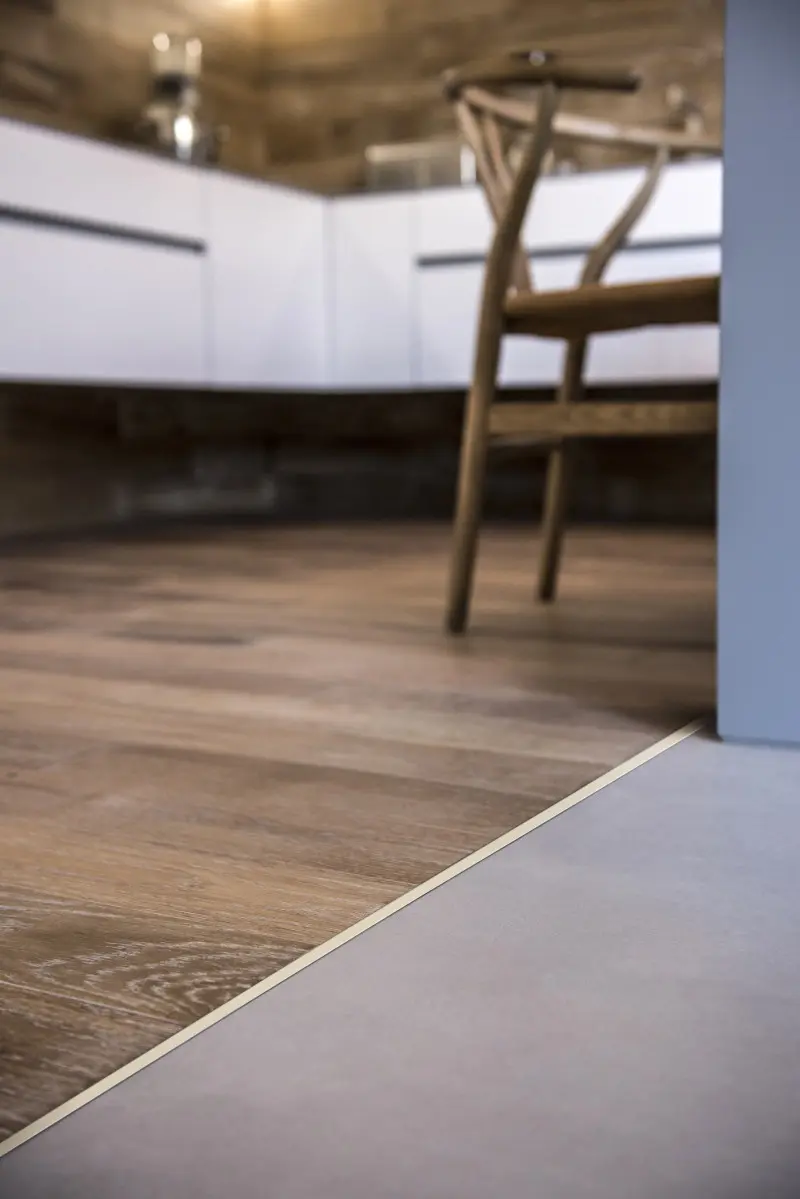
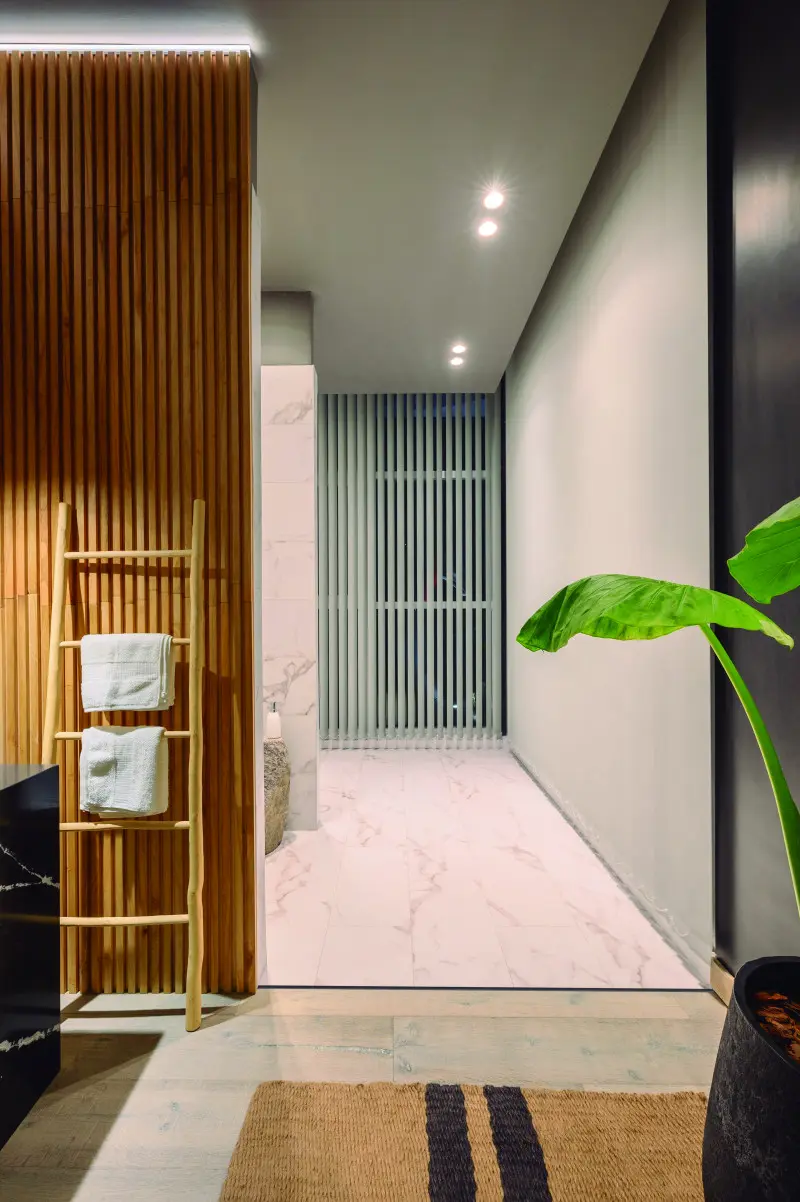
Among decorative profiles, stainless steel stands out for its corrosion resistance and its natural metallic finish, polished or brushed. Its performance depends on the variant: the most commonly used in this line are 430 steel and AISI 304 steel, which serve different functions.
430 steel is used mainly on interior walls, such as ceramic wall coverings in kitchens and bathrooms. It is suited to slightly corrosive areas, with moderate contact with moisture and lower mechanical demand.
AISI 304 steel has a higher chromium content and withstands corrosion and abrasion better. It is the variant for environments with constant moisture, heavy traffic and corners exposed to impact.
Compared with aluminum, stainless steel is heavier and has less variety of finishes: only polished or brushed.
When to specify aluminum?
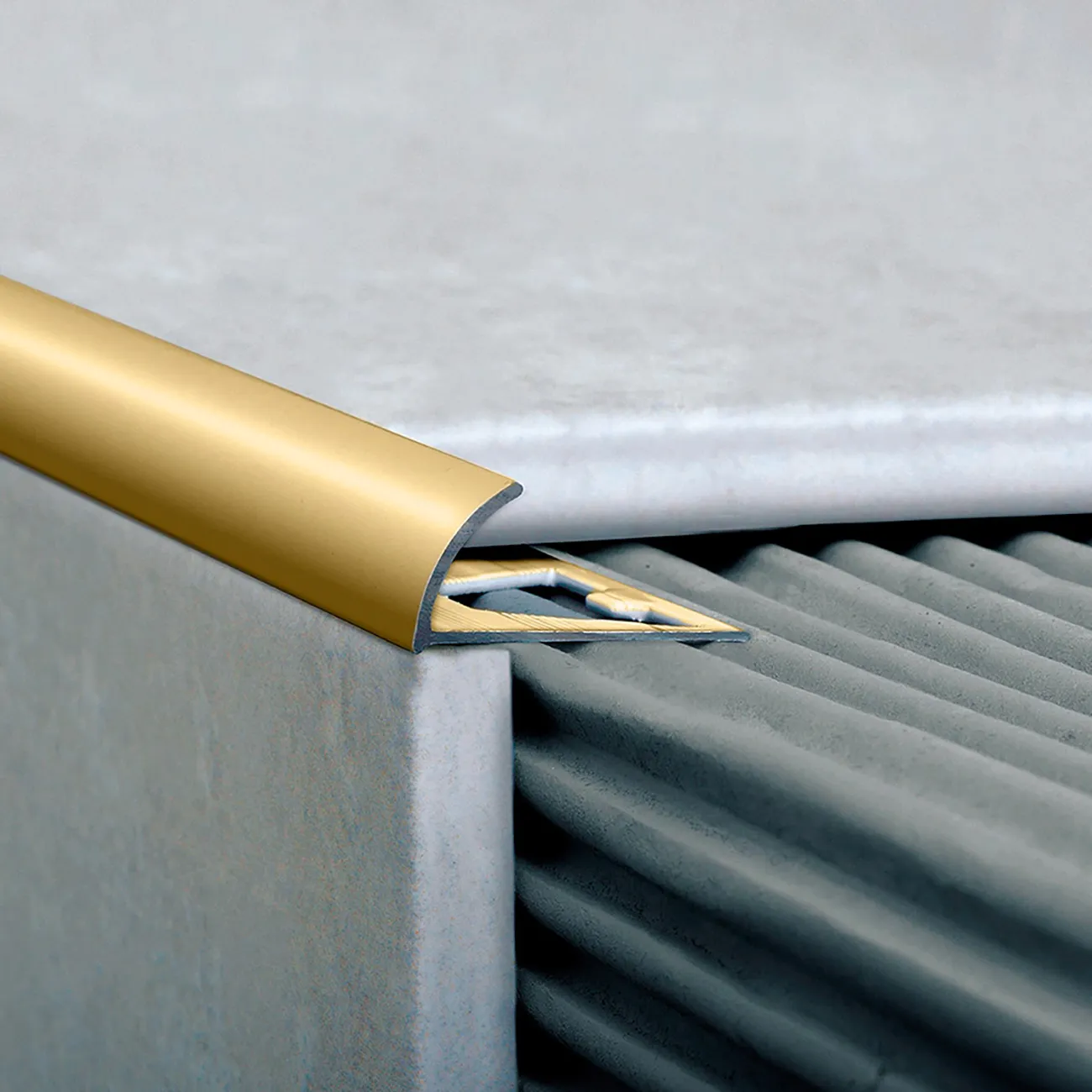
Aluminum stands out for being lightweight and easy to handle, which simplifies installation compared with stainless steel. It also offers high moisture resistance and a much wider variety of finishes, since it can be anodized or painted in different colors.
It is a good option for interiors and for projects where design takes center stage, such as wall coverings, baseboards and floors, when the goal is to integrate the profile into the aesthetic of the space without adding weight or complexity to the installation.
ATRIM decorative stainless steel, aluminum and PVC profile solutions
Within its decorative profile line, ATRIM develops products in all three materials.
ATRIM stainless steel profiles
ATRIM’s Spectrum line is made of 430 stainless steel, with polished and brushed finishes. It includes edge guards (Señorial and Ilustre) and listellos in different widths (Royal, Clásico, Emperador and Colosal), designed for ceramic wall coverings in kitchens and bathrooms.
For more demanding joints and corners, AISI 304 steel angles, 0.5 mm thick with a brushed finish, protect visible edges and joints in bathrooms, kitchens and commercial spaces.
ATRIM aluminum profiles
Within the decorative line, ATRIM’s aluminum floor profiles are made of 6063 T5 alloy, with polyester powder paint applied at high temperature, in sizes of 7, 10 and 12 mm and colors such as carbon, graphite and pearl. The Arch Edge Guard and Quadra Edge Guard models resolve transitions between floors and stair nosings, while the L-Shaped Rod provides a more minimalist separation between wall coverings.
For walls, aluminum profiles for wall coverings resolve edges and side or top finishes with a look that blends into the project.
ATRIM PVC profiles
Within the decorative line, ATRIM’s PVC wall profiles protect corners, edges and joints on ceramic-tiled walls. They are available in two sizes (Plus Edge Guard, 9 x 9 mm, and Premium Edge Guard, 12 x 12 mm) and in finishes such as white, light gray, dark gray, beige, champagne, ivory and brown, to suit different wall covering palettes.
Frequently asked questions about decorative stainless steel, aluminum and PVC profiles
Are these profiles suitable for hospitals, industrial kitchens or other spaces with high sanitary requirements?
The profiles described in this article are decorative: they are designed for aesthetic finishes on walls and floors in residential and commercial projects. For spaces with stricter hygiene and disinfection requirements, such as hospitals, clinics, laboratories or industrial kitchens, ATRIM has a separate line: hygienic-sanitary technical profiles.
Which material is best suited to the resistance your project needs?
It depends on what the project demands. Against corrosion and abrasion, AISI 304 steel is the variant suited to constant moisture and heavy traffic, while 430 steel is meant for slightly corrosive areas with lower mechanical demand. Against impact and wear, anodized aluminum offers high resistance and is also lightweight. PVC resists moisture and does not corrode with normal use, but its mechanical resistance is lower, so it is recommended for protecting edges in moderate-use environments.
Do aluminum profiles rust?
They do not rust the way iron does. Aluminum forms a natural layer that protects it from corrosion, which makes it suitable for interiors and for most residential and commercial applications.
Are ATRIM’s PVC profiles suitable for exteriors?
Decorative profiles are designed for interior installations, on ceramic-tiled walls in bathrooms, kitchens and laundry rooms.
Can different materials be combined in the same project?
Yes. It is common to use stainless steel in the most demanding areas, such as an industrial kitchen, and aluminum or PVC in the rest of the project, always making sure the finishes keep an aesthetic coherence.
No material is superior: the right choice among decorative stainless steel, aluminum or PVC profiles depends on weighing the use of the space, the level of demand and the aesthetic result each project is after.



 Go back


