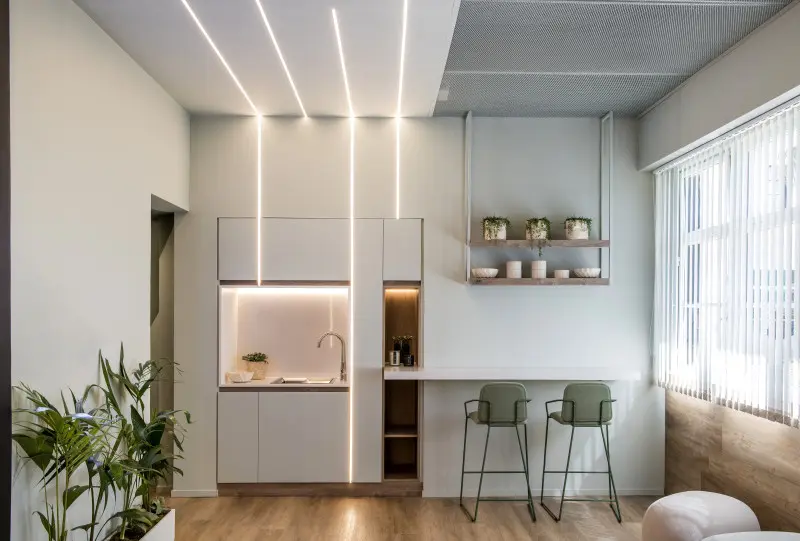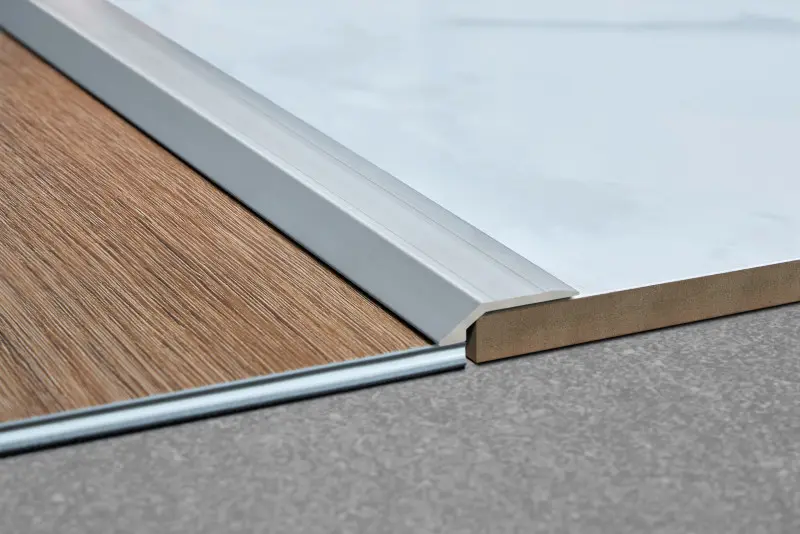
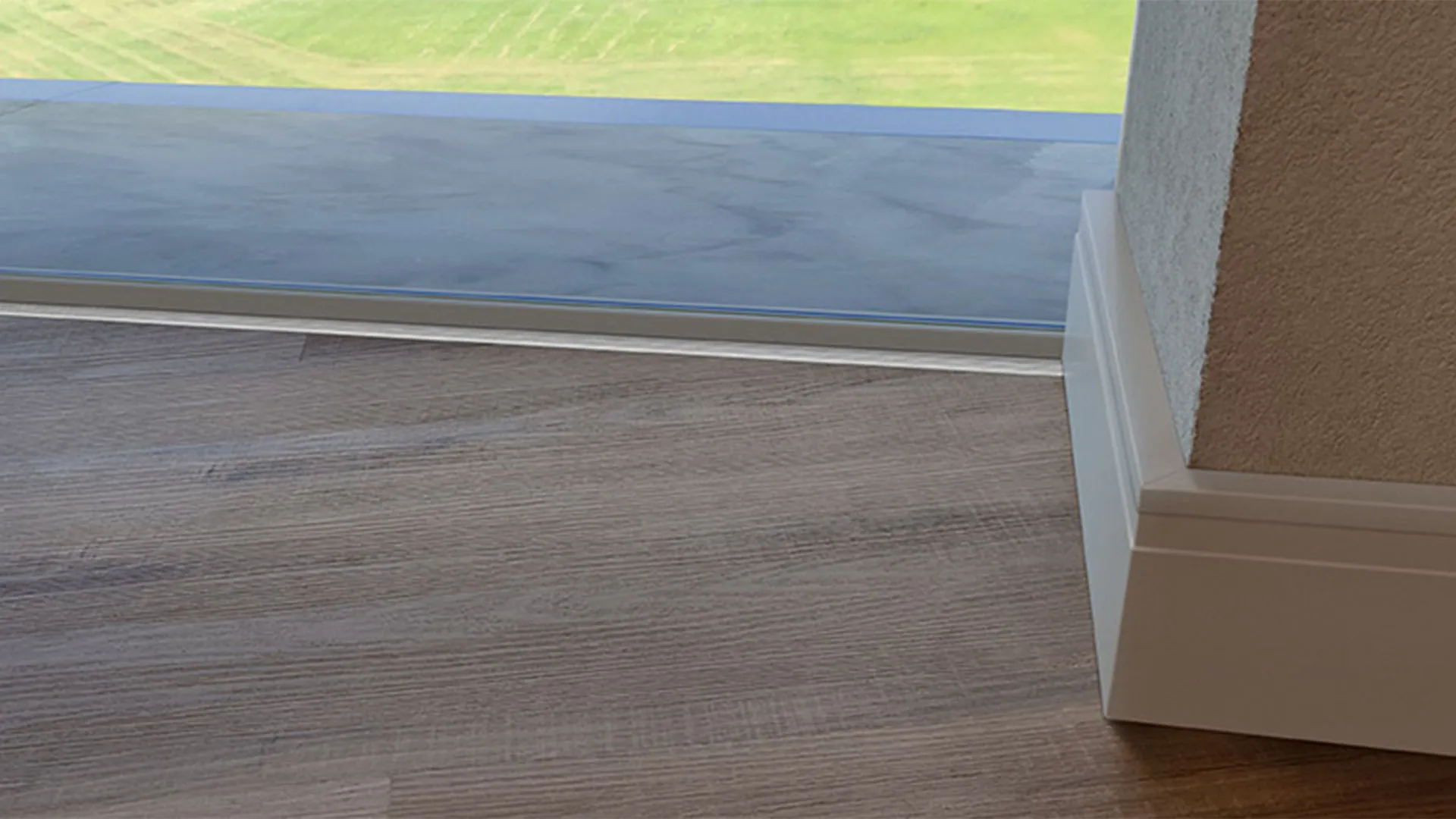
To choose profiles for porcelain tile, define three things before you buy: where they will be installed, the actual thickness of the tile, and the material and finish the project calls for. That combination determines whether the profile will protect an edge, handle a transition, finish a step or accompany a joint.
How to choose the right profile
When comparing profiles for porcelain tile, the choice gets simpler if you follow this order: application first, then size, and finally material and finish. This avoids evaluating profiles that look alike but were designed for different uses.
By installation location
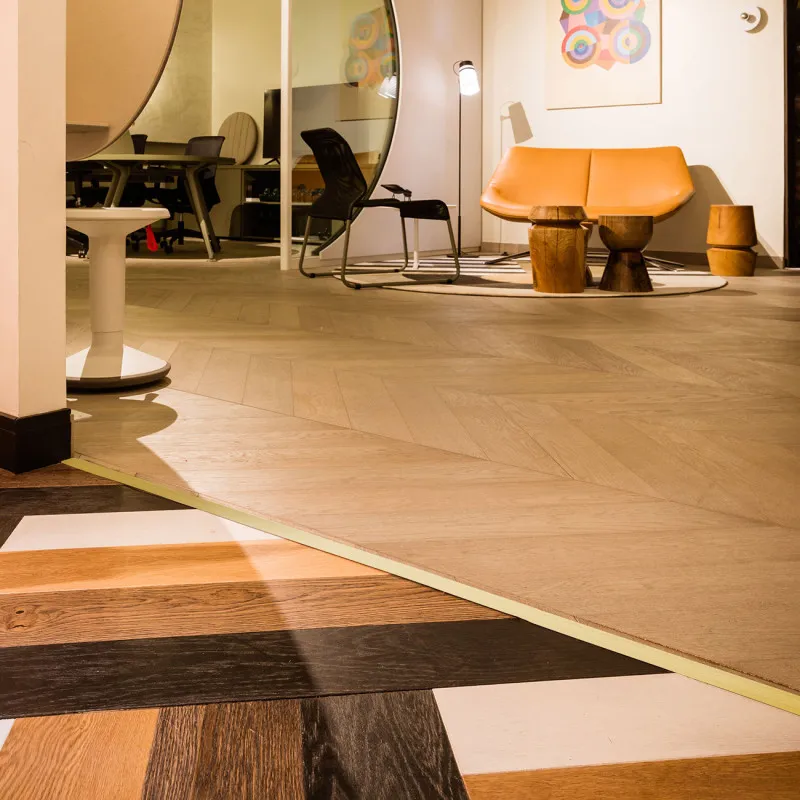
When choosing profiles for porcelain tile on a job, start by identifying the problem each piece has to solve. On a wall, corner, column or countertop, you may need to cover and protect an exposed edge. On a floor, the goal may be to separate two tiled areas at the same level, finish an edge or handle a small difference in height. On a staircase, the priority is usually to protect the edge of the step from traffic and make the footing safer.
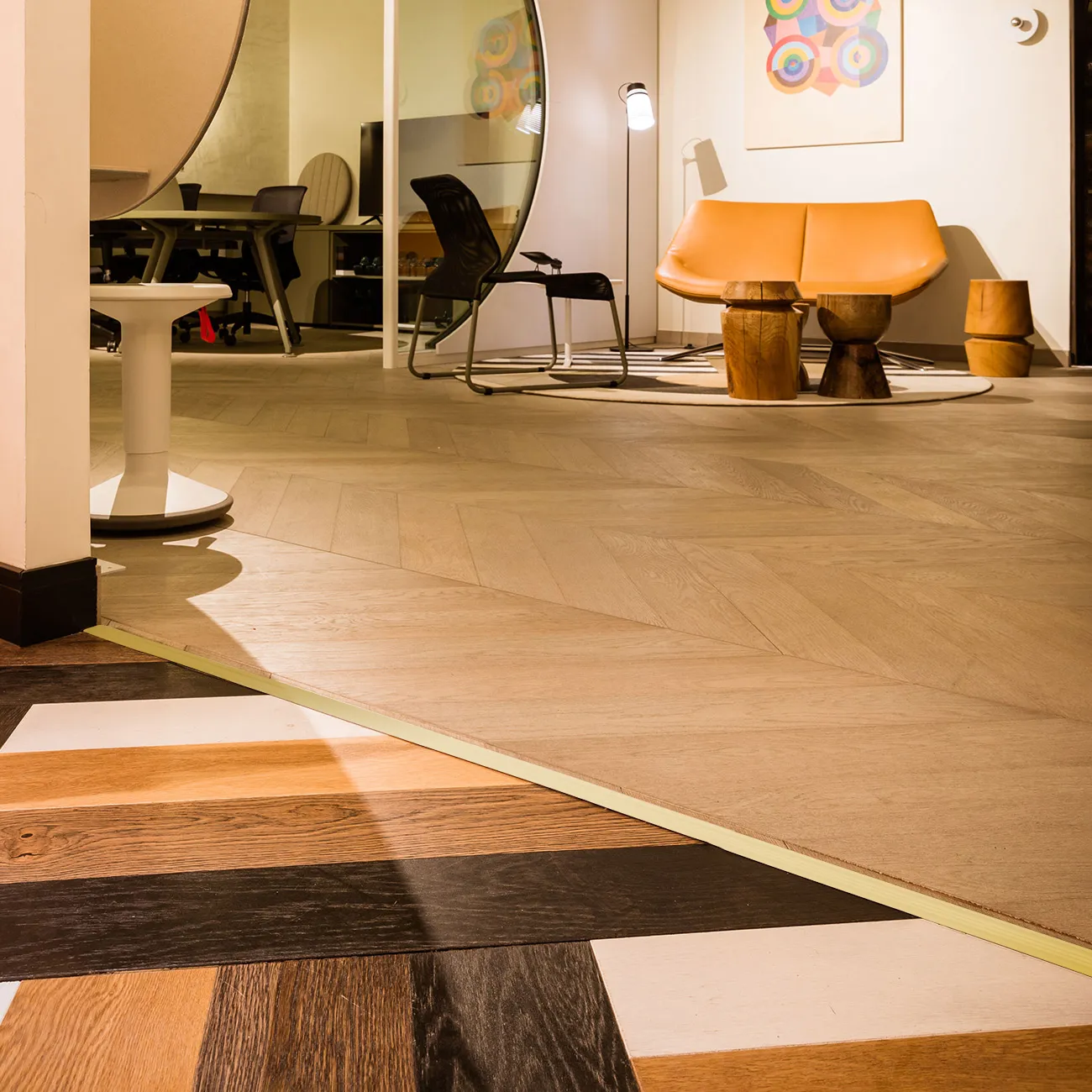
At transitions between floors, look at which materials meet and whether they are the same height. A change from porcelain tile to another covering is not resolved the same way as a separation between two equivalent areas. If the project includes movement in the substrate or the floor, the solution is an expansion joint, not a decorative profile.
By porcelain tile thickness
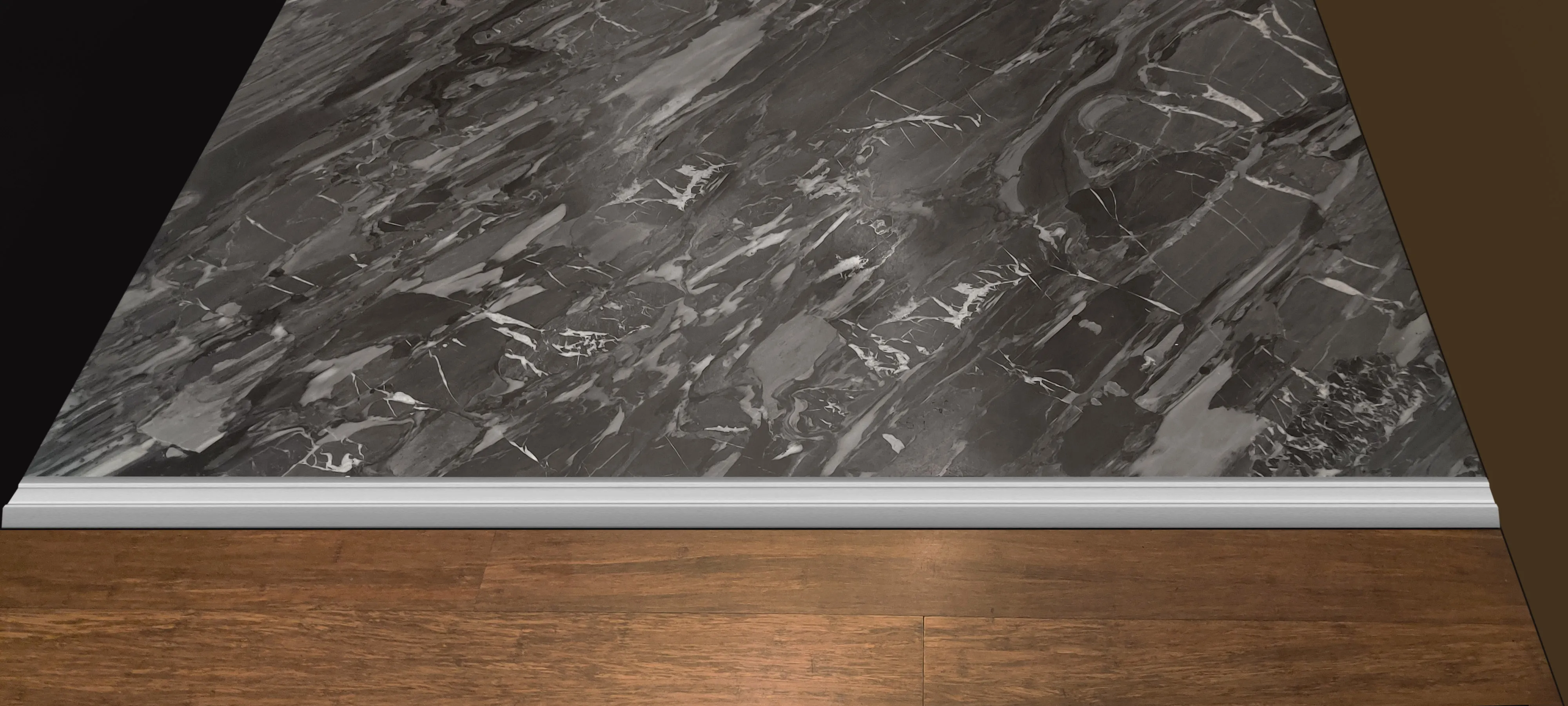
For profiles for porcelain tile, the size must be compatible with the thickness of the tile. Measure a real tile and don’t rely only on the nominal value on the box: two porcelain tiles that look alike can require different profile heights.
Then compare that measurement with the profile’s usable height or its technical data sheet. Also consider the planned installation system and the surface conditions. If the height is not compatible, the profile may sit below the edge of the tile or protrude more than intended, which affects the continuity of the junction.
By material and finish
The material is defined by the demands of the space: interior or exterior, traffic level, exposure to moisture or chemicals, cleaning frequency and the likelihood of impact. The finish is chosen afterward, based on the visual language of the project and how it relates to faucets, joinery, baseboards or other details.
Anodized aluminum combines resistance to corrosion, impact and wear with a variety of shapes, colors and finishes. Stainless steel can be a suitable alternative for applications that require high strength and durability, especially when conditions of use call for a material that performs well under traffic, moisture or certain chemical agents. The choice should follow the technical specification of each product. In both cases, check the material type and approved use in the technical data sheet: not all metal profiles are designed for the same location.
Finally, decide whether the profile should blend in with the porcelain tile or contrast with it. A similar finish adds continuity; a different one can draw a line, separate areas or turn the junction into a design feature. Aesthetics should support function, not replace it.
Checklist before specifying: location, function, actual tile thickness, condition of the junction, traffic level, exposure and desired finish. With those details defined, only then does it make sense to compare models.
Which ATRIM profile to choose for each application
Once you have defined the function, size and material, you can choose profiles for porcelain tile from the ATRIM range with a clear criterion.
Profiles for edges and corners
If you need to protect the edge of a rectified porcelain tile and want a curved finish, the Bullnose Edge Guard is the right option. If the project calls for straight lines and a more defined look, consider the Quadra Edge Guard. For a junction with a curved look, the option is the Arch Edge Guard; and if you want a thin finish or a subtle decorative line, the L-Shaped Rod protects the edge with less visual presence.
If you are looking for a metal profile for porcelain tile on walls, see the family of aluminum profiles for walls. When the tile is slim or thin, ATRIM 7 mm profiles can match it more precisely, as long as the size of the model is compatible. Within that line, the Arch and Quadra Edge Guards from the Stone Collection offer textured finishes for contemporary projects. That way, an aluminum profile for porcelain tile can provide protection without losing visual continuity.
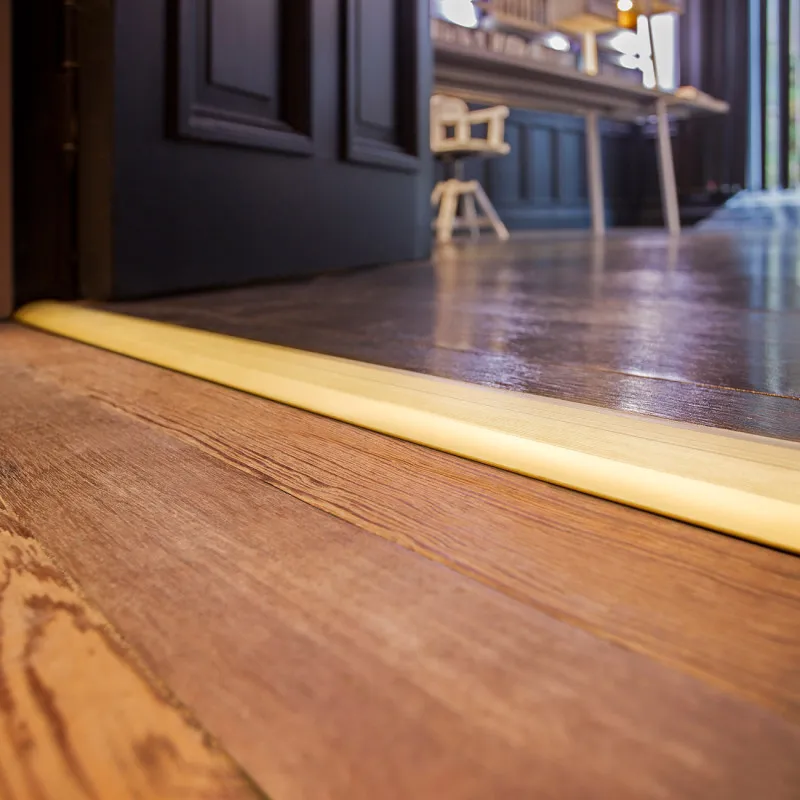
Profiles for floors and transitions
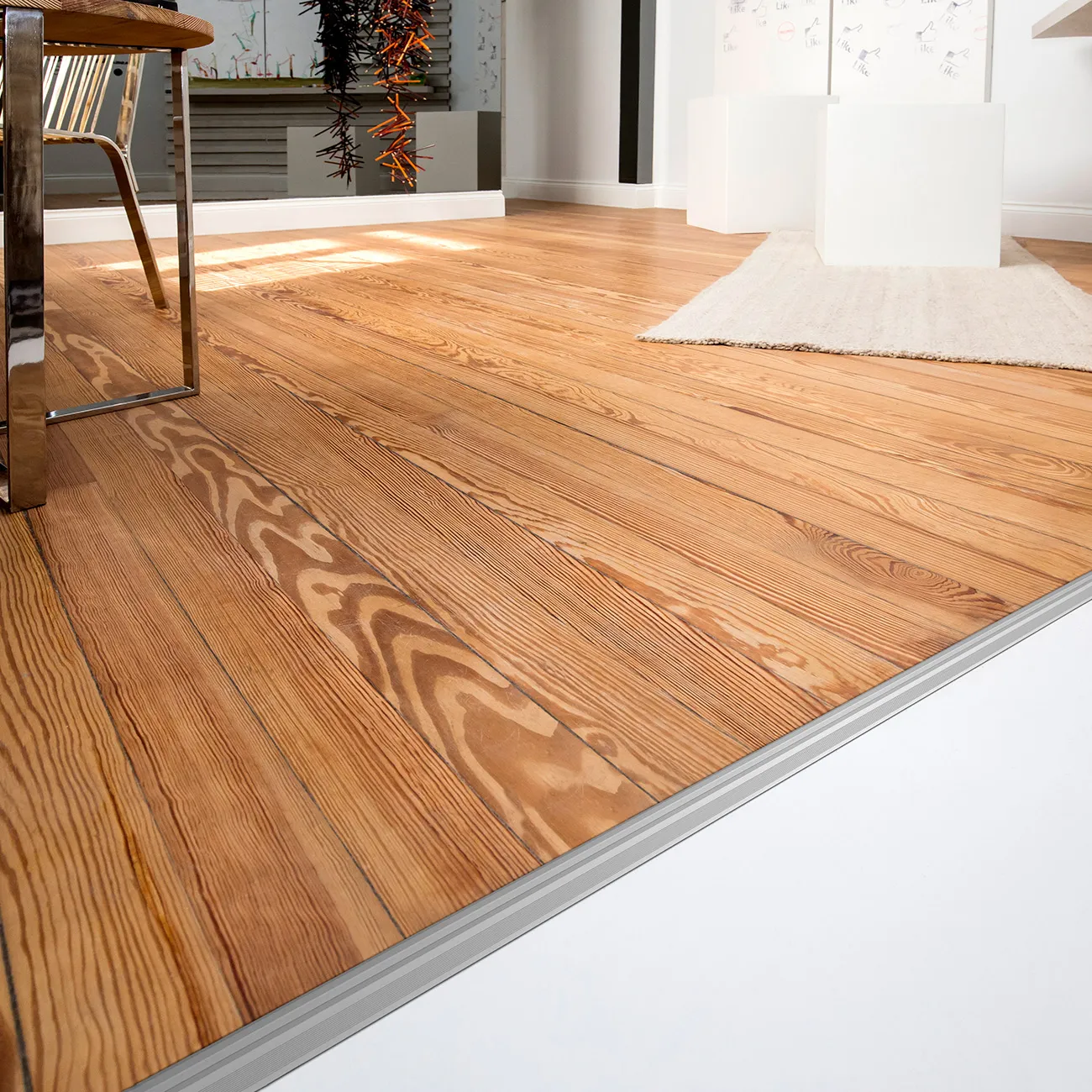
When choosing profiles for porcelain tile floors, first determine whether the surfaces are at the same level. If you want to separate rooms or join aligned coverings with a straight line, consider a Squared Finish. To soften a junction or a small difference in height, a Rounded Finish is more suitable. When the priority is to protect an edge with a curved shape, the Arch Edge Guard does the job. And to frame an area or create a delicate separation, the L-Shaped Rod finishes the edge with minimal visual presence.
When porcelain tile meets another system, the solution must also take that material into account. For a junction with vinyl, LVT or SPC, see the transition profiles for vinyl, LVT and SPC floors. If the junction is with laminate flooring or carpet, check the line of profiles for laminate, parquet and carpet floors. These families cover joints, protect edges and resolve differences in height; they are not interchangeable just because both products are profiles.
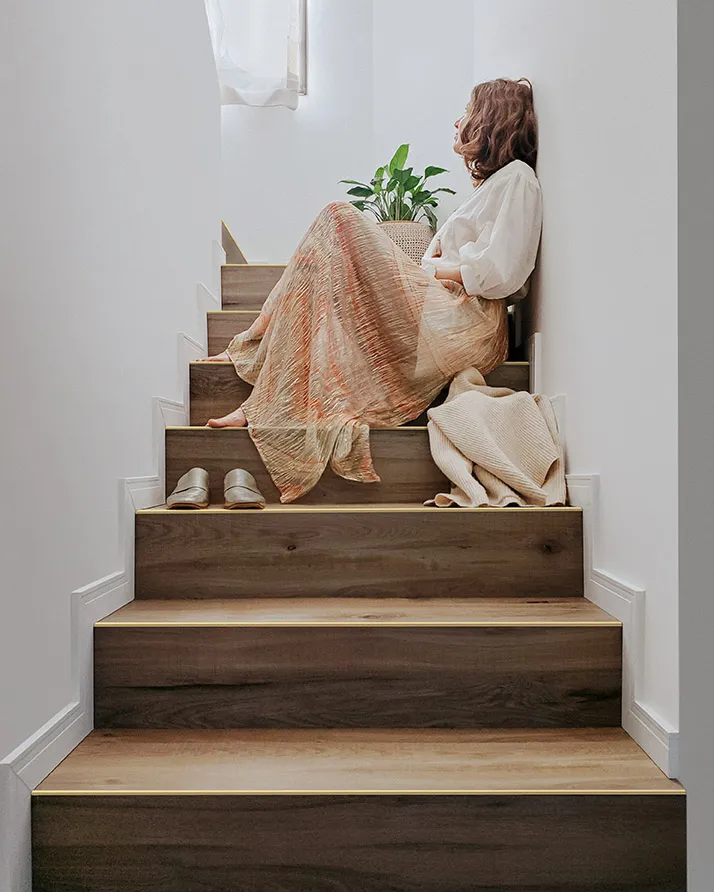
Profiles for steps and joints
If the goal is to protect the edge of a tiled staircase and reduce wear from use, choose a stair nosing according to the geometry of the step, the traffic and the level of safety required. ATRIM offers aluminum and PVC models, as well as non-slip alternatives. To mark the junction with a straight line in compatible applications, a Squared Finish can also be considered.
On large surfaces or where the project involves floor movement, the joint is specified separately. The A-Joint family includes models in 304 stainless steel and aluminum, with a central polyurethane piece that compensates for and absorbs movement in the floor and the materials. The choice of model depends on the application and the required dimensions. The location and size of the joint must respond to the project, the site conditions and the technical documentation of the product.
Once the floor junctions are resolved, ATRIM baseboards and counter frames can complete the connection with walls and openings and carry the finishing criterion through. They play a complementary role: they do not replace transition profiles or expansion joints.
Frequently asked questions about profiles for porcelain tile
What profile size do I need?
You need a size compatible with the actual thickness of the porcelain tile and the intended application. Measure the tile, identify whether the profile goes on a wall, floor, edge, transition or step, and check the usable height in the technical data sheet. If you are working with slim porcelain tile, a 7 mm profile may be the right solution as long as the dimensions of the model and the tile are compatible.
Aluminum or stainless steel?
There is no universally better material: the choice depends on the application. Aluminum offers a wide variety of profiles, colors and finishes and is a versatile option for different projects. 304 stainless steel can be a good fit for applications that require high strength and durability. In all cases, check the technical data sheet of the chosen model to confirm its recommended use.
Is the profile installed before or after the porcelain tile?
Embedded profiles are installed during tile installation. In the procedure ATRIM indicates for wall and floor profiles, you first apply the adhesive, then position and align the profile, then set the tile and clean off the excess. Because the sequence can vary by model, always check the technical data sheet and the specific tutorial before you start.
Choosing profiles for porcelain tile on technical criteria avoids improvisation on site and lets edges, transitions, steps and joints work as a system. Define the application, measure the tile, and compare materials and finishes: the right profile protects the tile and makes the finish look truly resolved.