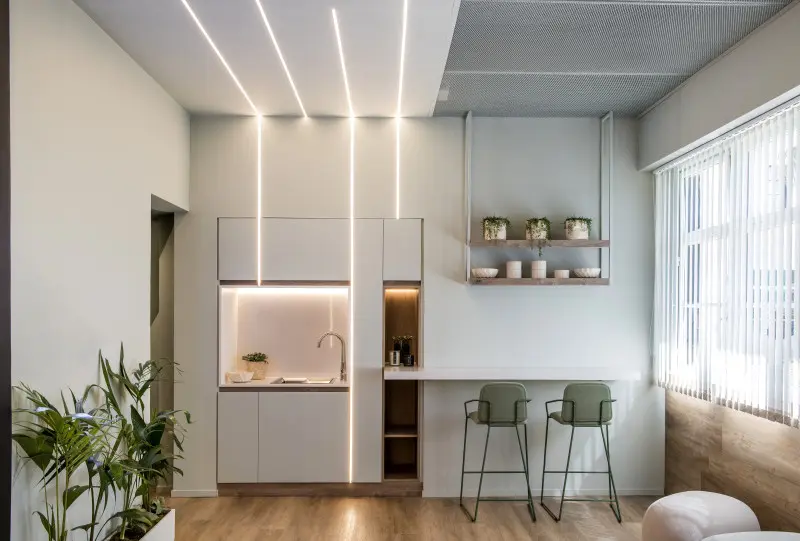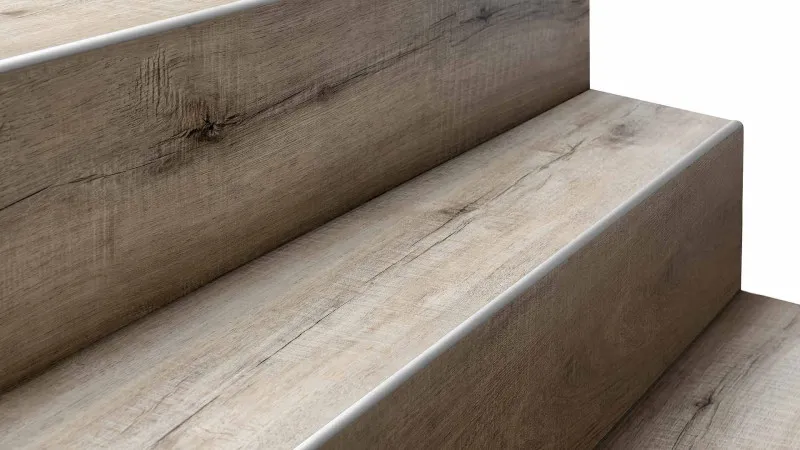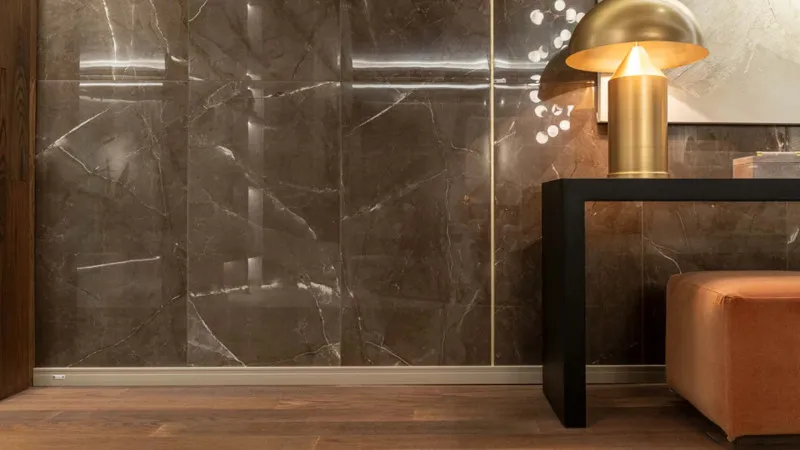

Floor transitions are essential in architectural projects, since they ensure visual continuity, durability and safety when joining different types of coverings. Choosing the right transition depends on weighing a few specific variables.
What to look at before choosing a transition
Before thinking about which profile to buy, define these five questions:
Height difference between the two floors
Measure both coverings once installed (or their final thickness, if they are not yet in place). If they end up at the same level, a simple joining profile is enough. If there is a height difference, you need a profile that compensates for it, and the range of height difference each model covers is different: not all of them absorb the same difference.
Type of material on each side
A rigid floor (ceramic, porcelain tile) behaves differently from a flexible one (vinyl, floating, carpet). The transition has to accommodate both behaviors.
Time of installation
Some profiles are installed together with the covering (they are integrated from the start); others are installed afterward, over a finished floor, with drilling and a wall plug. If you are resolving a job that is already done, this narrows the available options considerably.
Traffic level of the space
In high-traffic or more demanding areas (retail, offices, wet areas), prioritize stainless steel over aluminum for its resistance. In residential spaces with normal traffic, anodized aluminum is enough and offers more variety of finishes.
Type of fastening desired
Some profiles have visible screws and others have concealed fastening systems. If the project calls for a minimalist finish, it is worth confirming whether a concealed-fastening version of the model you are considering exists before ruling it out because of cost.


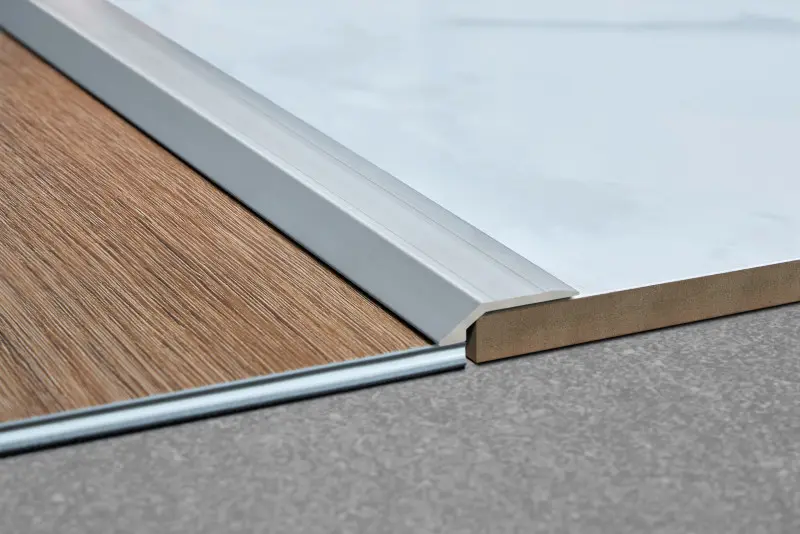


5 common mistakes when choosing or installing floor transitions
Measuring before the floors are installed: The final height of a covering (adhesive included) does not always match the nominal thickness on the box. Choosing the profile based on a theoretical calculation, instead of the real measurement once both floors are in place, is the most common reason the height difference ends up poorly resolved
Underestimating the real height difference: Each profile compensates for a specific range of height difference. Forcing a model designed for a smaller difference ends in a transition that does not sit well or looks forced
Choosing the profile after installing the floors, without leaving the necessary space: Some profiles need a joint gap defined beforehand between the two coverings. If that gap was not planned, the options are limited to models that are installed on top, with drilling
Using aluminum where stainless steel was called for: In high-traffic areas or areas with high exposure to moisture, an aluminum profile wears out or deforms sooner than expected. Stainless steel extends its service life much further in these scenarios
Not checking whether a concealed-fastening version exists: Several models have a variant with a fastening system without visible screws. Ruling it out without comparing can mean giving up aesthetics
Which ATRIM transition to choose according to floor type
When one of the floors is vinyl, LVT or SPC
If both end up at the same level and the vinyl is between 3 and 5 mm thick, the T Profile covers the edge without creating a step, regardless of the material of the floor on the other side (porcelain tile, ceramic or another vinyl). If there is a height difference of up to 5 mm, Ramp or Gap compensate for it. Gap also works well in junctions with wood or carpet.
When one of the floors is floating or carpet
Within the line of profiles for laminate, parquet and carpet floors, if the two floors end up at the same level, a Joint Cover covers the junction. With a height difference, a Height Difference Cover or a Height Difference with Quick-Fix compensates for it; the latter has concealed fastening. For carpet specifically, the Separator with Quick-Fix is installed once both coverings are in place, with drilling and a wall plug. The Irregular Angle resolves the perimeter against a wall or door, and the Mushroom is a quick option to hide a cut or a damaged edge at the junction.
In either case, if the space has high traffic or high exposure to moisture, look for the stainless steel version of the chosen model before the aluminum one.
Transition profile installation videos
Here are two video tutorials for installing some of our floor transition profiles.