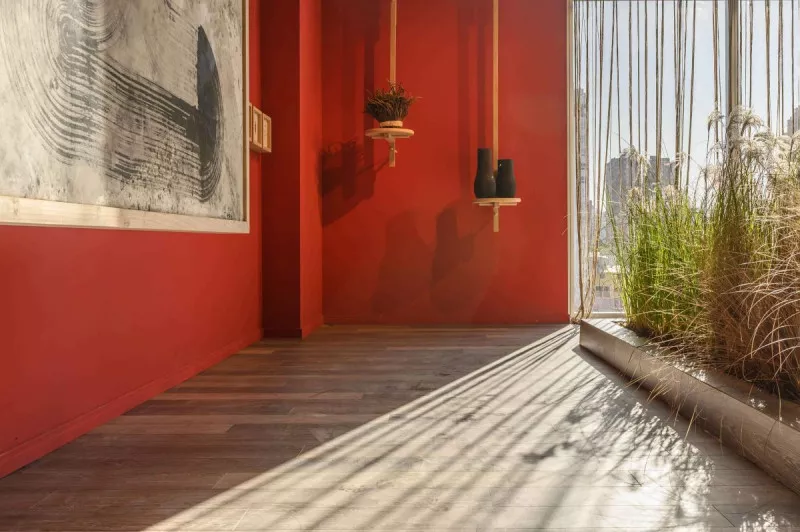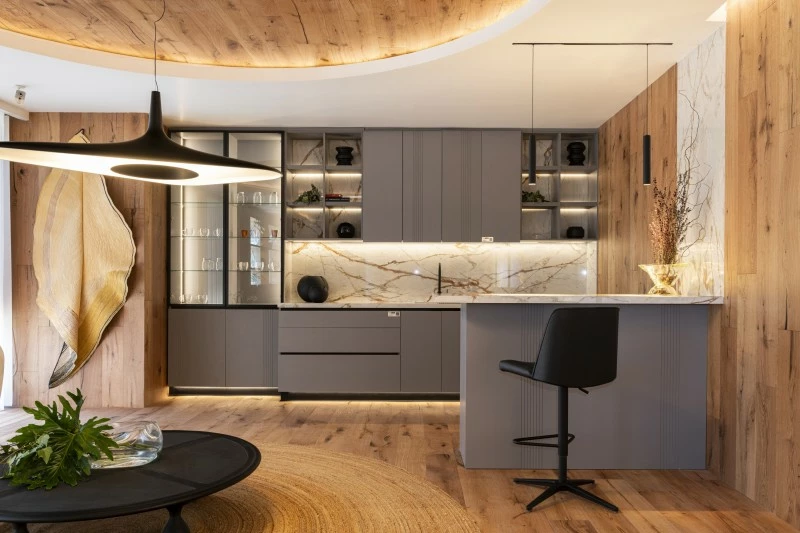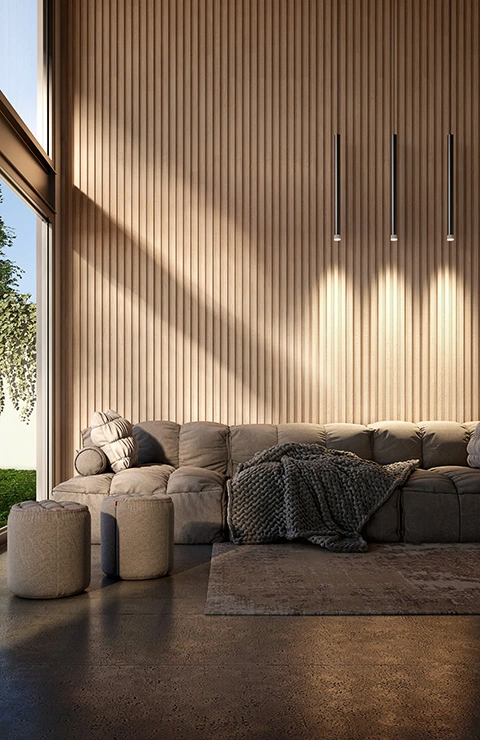
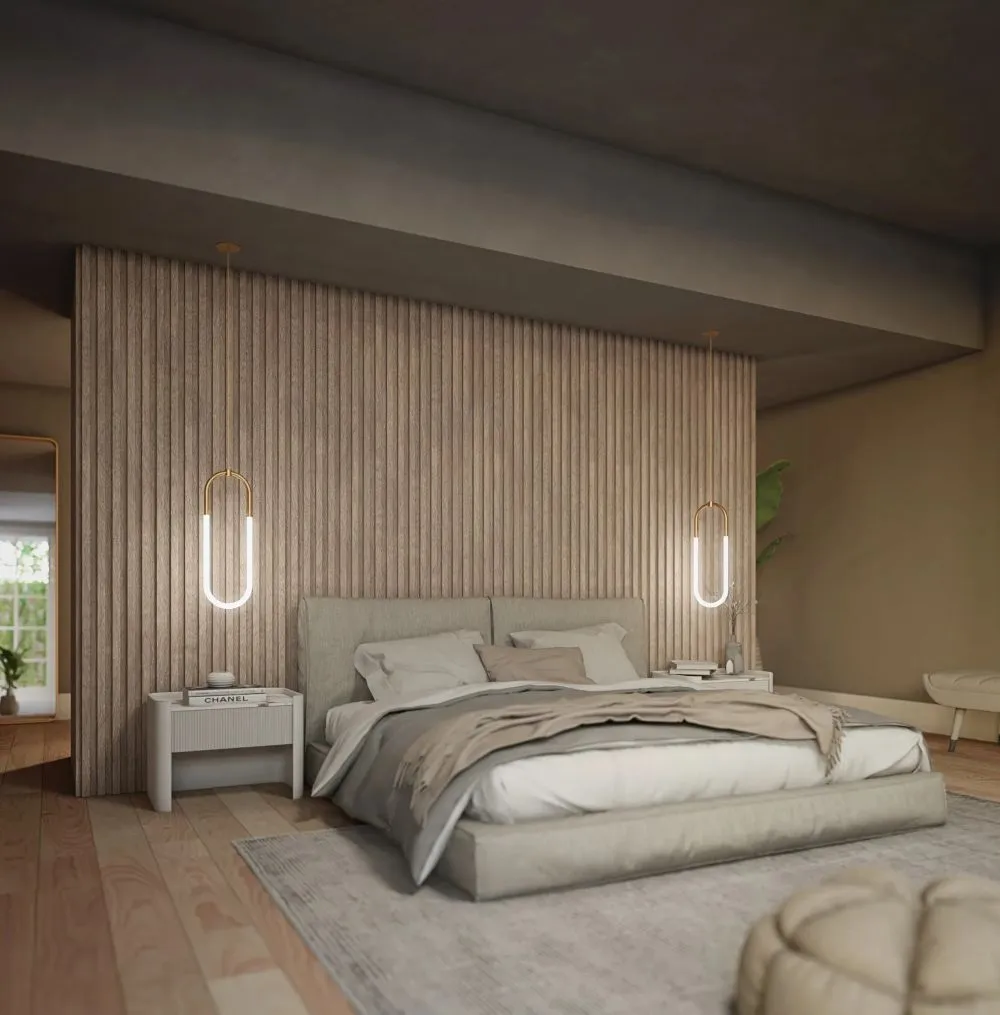
The wall is no longer a neutral plane: it has become an active surface within the project. Contemporary wall coverings make it possible to work with scale, texture, continuity and materiality, which opens up new possibilities for interior architecture and space design.
Where wall covering design is heading
Recent editions of shows such as Casa FOA confirm where the conversation is going: the surface is no longer a background, it is a design resource.
The most visible trends today are warm, organic textures, with finishes inspired by wood and natural stone, and monochrome surfaces with relief: single-color walls that add depth through volume.
Modular designs, with pieces that repeat with precision, bring rhythm and visual continuity. Lightweight, efficient materials also prevail: solutions that are easy to transport and install and that shorten construction time without giving up visual impact.
What to look at when choosing a wall covering system
Before specifying a wall covering, check these criteria against the specific needs of the project:
Use and traffic of the space: An accent wall in a living room is not the same as a corridor wall in an office or a retail space. The higher the traffic, the greater the demand for impact and abrasion resistance
Substrate preparation: Before specifying, it is important to verify the conditions the base surface requires and the installation instructions for the chosen system
Thickness and weight: Check the weight of the covering, the condition of the substrate and the fixing system indicated by the manufacturer
Maintenance: Determine whether the covering can be cleaned with a damp cloth or requires specific products and care, which is especially relevant in high-traffic spaces
Aesthetic coherence: The covering must integrate with the floor, lighting, joinery and furniture of the project
Construction schedule: The installation system and the complexity of the covering can affect execution times. For projects with tight schedules, consider solutions that simplify installation
Sustainability: Consider the expected service life, the conditions of use and the care the material requires
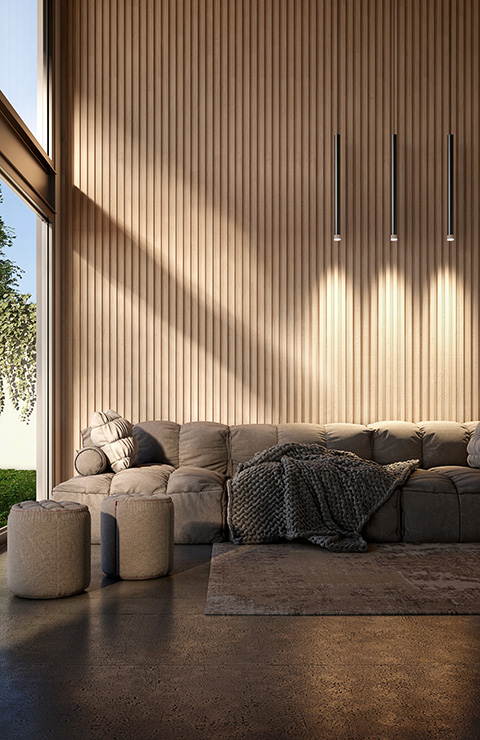
Epsilon wall coverings to transform walls without construction work
ATRIM Epsilon wall coverings are made of a rigid high-density polystyrene polymer obtained through an extrusion process, with a density of 450 kg/m³. The material combines low weight with resistance to impact and wear.
They are installed by applying adhesive (PRO-FIX or another compatible one) to the back of each panel. In addition, the interlocking system between pieces takes care of alignment and hides the joints, with no need for tile adhesive or grout.
Advantages of Epsilon wall coverings
Among the advantages of Epsilon decorative wall coverings, the following stand out:
Fast, precise installation: Interlocking system that hides joints and shortens installation time
Durability: Resistance to moisture, impact and heavy use
Simple maintenance: Cleaned with a damp cloth and neutral products
Job-site optimization: The installation system allows for practical, orderly application
Architectural compatibility: Integration with ATRIM baseboards, counter frames and profiles
Models and finishes
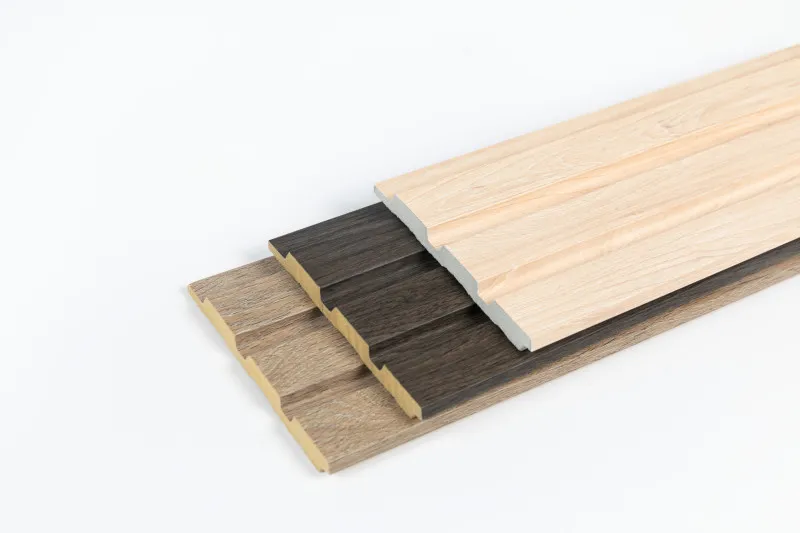
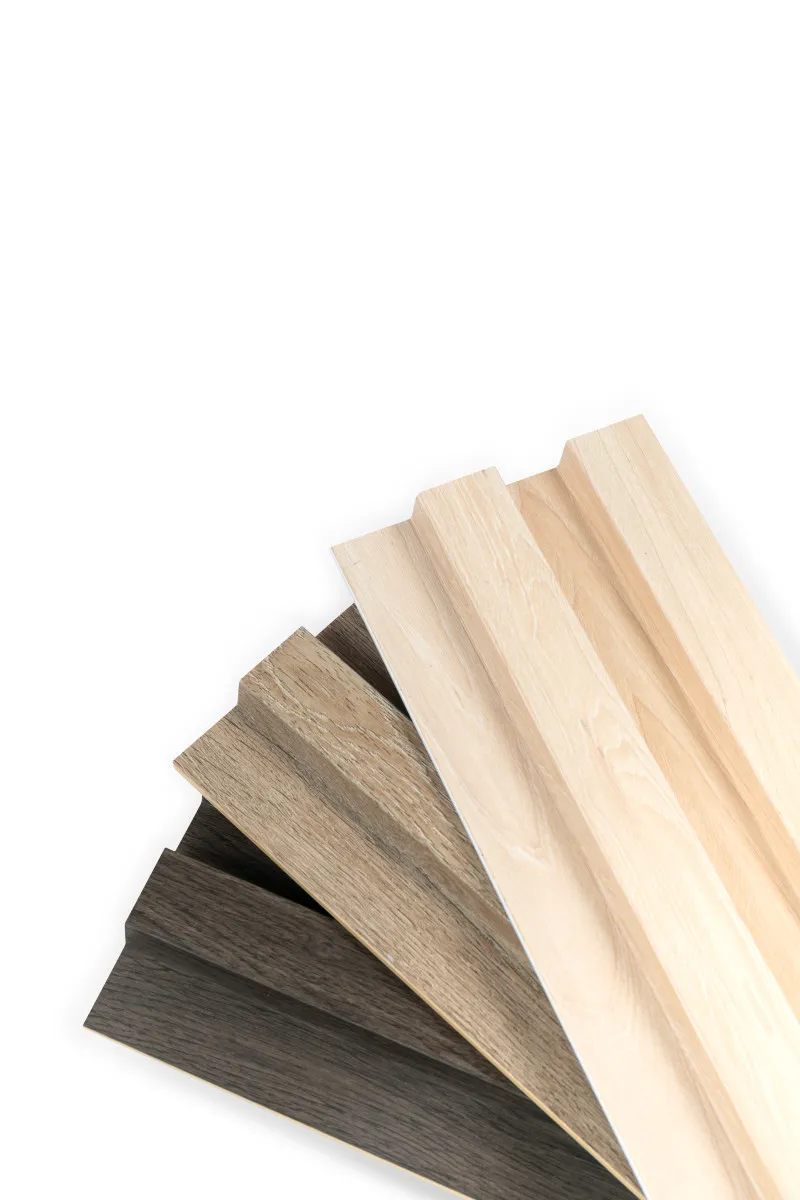
The line has six options, designed for different scales and design languages: Slim, with a linear, minimalist look; Wide, with a bolder pattern and greater presence; Snail, with deep relief and organic movement; Roller and its Extra Roller variant, at a larger scale; and Zig Zag, the most recent addition, with a dynamic geometric pattern.
Interior wall coverings are available in different finishes that adapt to a variety of architecture and design styles:
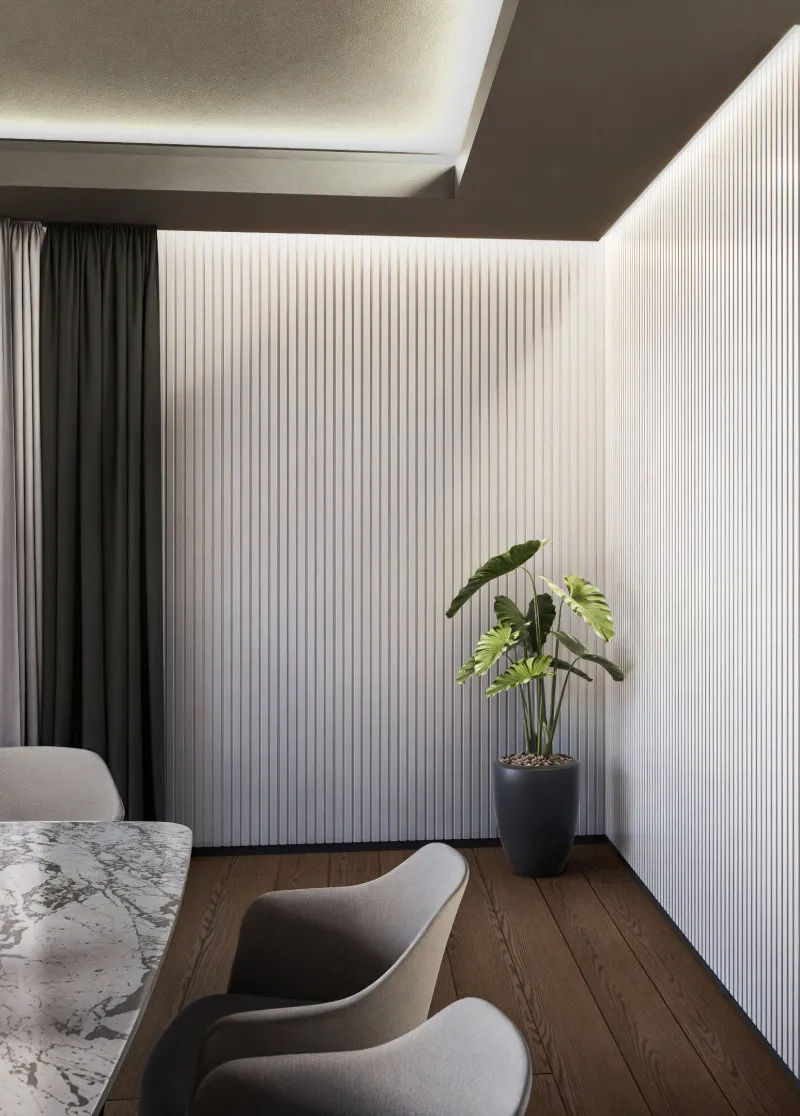
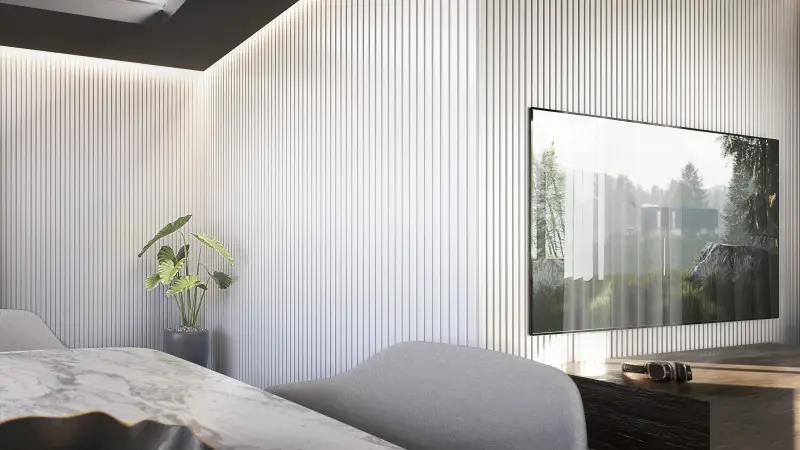
Paintable matte white, available in all models
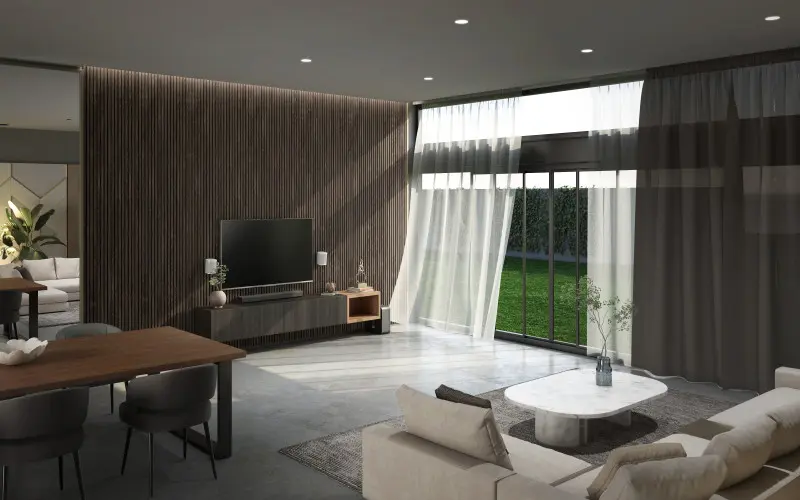
Wood-look finishes in natural oak, dark oak and walnut (Slim and Wide)
Sand and Siberian gray (Snail)
Warm oak (Extra Roller)
Sand oak and basalt gray (Zig Zag)
The entire line is compatible with ATRIM baseboards, counter frames and profiles, which makes it possible to resolve a complete project with a single material language.
Where to install interior wall coverings
Wall coverings can be applied in different spaces within an architectural project.
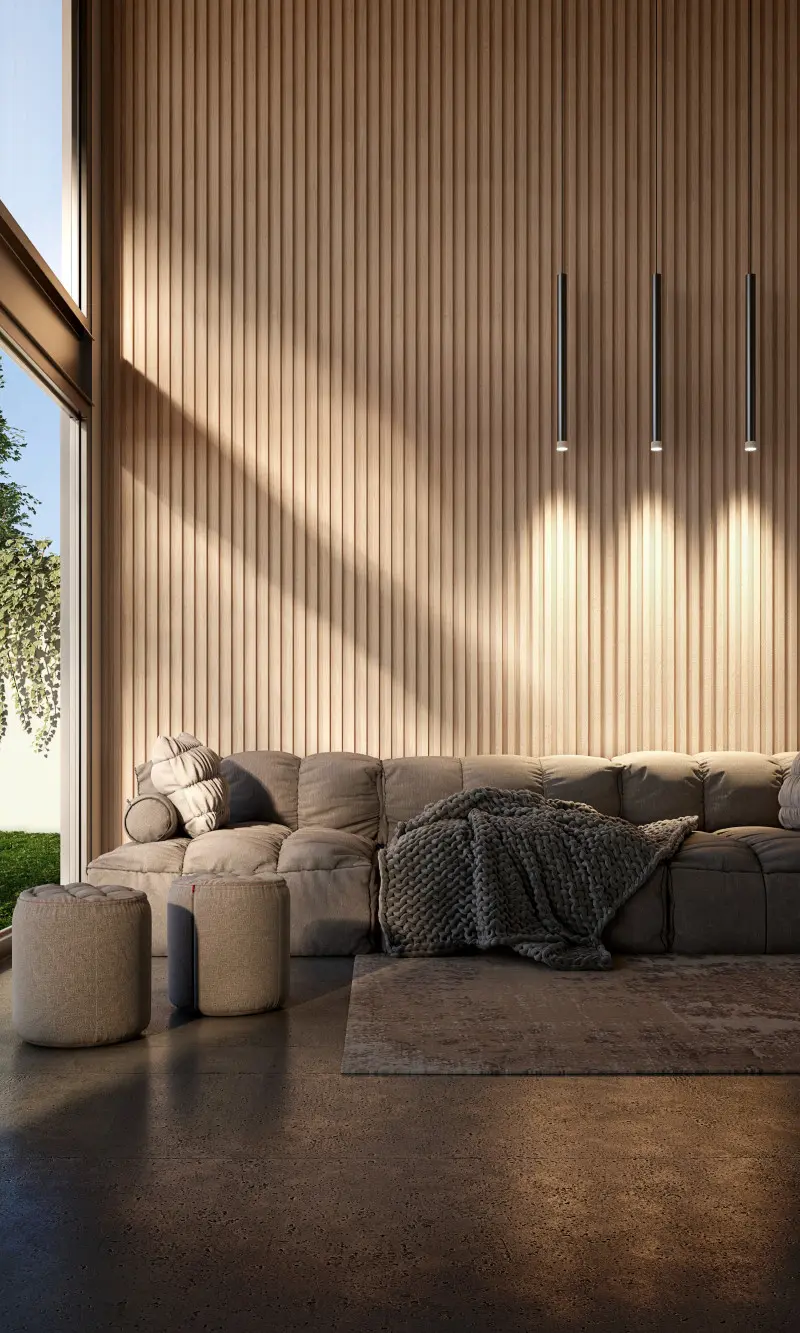
Living rooms and social areas, bedrooms, offices, retail spaces and hotels are the settings where they are most often used: accent walls, bed headboard walls, reception areas and any surface that needs visual impact without adding weeks of work.
If you want to see these coverings applied in real projects, the Projects section of the ATRIM site includes cases from architecture firms and interior designers who have already incorporated them.
Frequently asked questions about wall coverings
What are the advantages of wall coverings?
Wall coverings protect surfaces, improve architectural detail and add texture and depth to interior walls.
Are wall coverings moisture resistant?
Yes. Epsilon wall coverings are made of high-density extruded polystyrene, a material that resists moisture and is easy to maintain.
How does Epsilon differ from a traditional ceramic covering?
Epsilon is installed with adhesive and an interlocking system, with no tile adhesive or grout, which shortens construction time.
Which models are in the line?
There are six models: Slim, Wide, Snail, Roller, Extra Roller and Zig Zag, each with a different visual effect, from minimalist lines to deep relief.
How do I calculate how much covering I need?
With the total surface area and the size of each piece, you can calculate how many units you need:
Measure the width and height of the wall to be covered and multiply them to get the total square meters
Subtract large openings (windows, doors) if they will not be covered
Add 5% to 10% extra to allow for cuts, waste and adjustments at corners, columns or junctions. The more irregular the wall or the more cuts the design requires, the closer you should get to 10%
Add the start and end trim pieces if the chosen model requires them for a clean finish
What tools are needed to install a wall covering?
The tools needed depend on the model and the installation system. Before starting, consult the instructions for the selected covering.
What maintenance does a wall covering need after installation?
In general, cleaning with a damp cloth and neutral products is enough. Avoid bleach, acids, solvents or acetone, which can damage the finish. Otherwise, it requires no periodic maintenance.
If you have questions about how to cover a wall, the ATRIM team offers personalized technical support to help you choose the right solution.
Where can I get ATRIM Epsilon wall coverings?
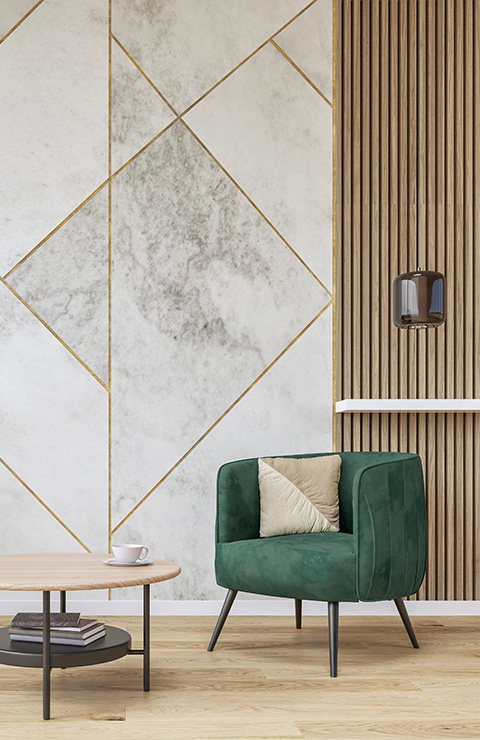
Discover the ATRIM Epsilon line and find the wall covering that best fits the aesthetic and functional needs of your project.